
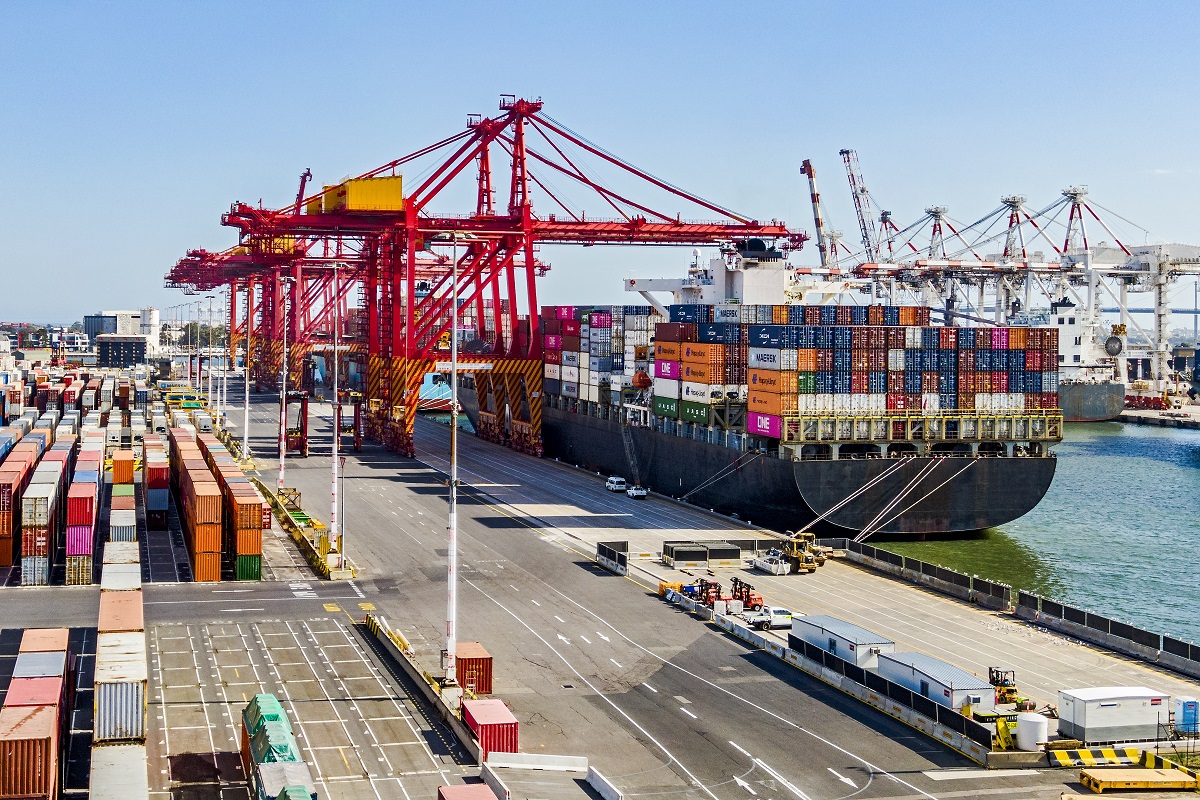
Modern global supply chains shift rapidly. Trade agreements are negotiated, tariffs are imposed (or lifted), regulations change, global conflicts happen, and suddenly carefully cultivated supplier relationships take on new complexities. How do you manage your business when disruption feels inevitable?
A recent survey of 100+ middle market business owners* in New England suggests the first step is understanding the real impact on your business. Let’s unpack what this means and approaches to consider for your business.
The Confidence-Resilience Disconnect
Ninety-eight percent of respondents reported confidence in their ability to navigate trade policies. That's a striking consensus – yet when examining actual experiences, a different picture emerges.
Take companies in the Technology & Trade Services sector, for example – in the past year, 71% experienced operational impacts and 57% percent lost contracts or customers. We see similar numbers from a regional perspective: for example among companies in New Hampshire, 87% reported disruptions to operations and 53% also lost contracts or customers.
This disconnect reflects a broader risk assessment challenge. Organizations are adept at managing individual disruptions – adjusting to a new tariff or finding an alternative supplier when one becomes unreliable – but that is one piece of the puzzle. For long-term resilience, proactive frameworks should be considered to anticipate systemic shifts and build agility.
Unpacking The Costs of Trade Disruptions – and How to Mitigate Them

Disruptions can compound across organizations. Supply chain volatility creates uncertainty in delivery timelines, while fluctuating raw material costs squeeze margins. This can lengthen lead time, eroding customer satisfaction and driving business to competitors. For organizations with international business, the level of uncertainty can increase making it even more difficult to project costs and timelines, while foreign exchange volatility creates unexpected headwinds.
These are significant, but there is another hidden opportunity cost to trade-related disruptions: time spent addressing crises diverts resources from innovation and strategic growth.
How Are Companies Building Resilience?
We’re seeing businesses implementing approaches across multiple dimensions:

- Diversifying sourcing strategies (adopted by 66% of survey respondents) to avoid single points of failure. If one supplier is affected, others can fill the gap. However, this requires upfront investment in building multiple vendor relationships and coordinating across more complex logistics networks.
- Leveraging trade finance solutions (52% of respondents) as a risk management strategy. This suggests that being intentional about understanding and considering the financing position of your business – continually – can help you make deliberate, rather than reactive, decisions to navigate a range of economic situations.
- Shifting to domestic suppliers (52%). The calculus has shifted to favor resilience over low-cost sourcing. Nearshoring and domestic sourcing may offer different cost structures than global ones, but they also tend to offer predictability and reduced policy exposure. That said, the best approach plans for a range of scenarios – balancing domestic sourcing with strategically selected international suppliers.
The trade environment will continue to evolve, and the question isn't when changes will happen – it's whether your organization is prepared to face them. Because disruptions hit harder when they are unexpected. And businesses that plan ahead and adapt faster will gain advantage.
Ryan Hanna, Chief Investment Officer of Cambridge Trust Wealth Management, a Division of Eastern Bank, explains, “Periods like now can feel headline-driven, but the market’s message is consistent: a wider range of outcomes tends to increase dispersion. History also suggests that volatility can create opportunity. The right response is rarely a dramatic shift; it is usually a recommitment to process and planning, including appropriate liquidity and thoughtful balancing as economic conditions change.”
Eastern Bank understands an evolving trade landscape can create opportunities to think differently about the finances and financing of your business. Speak with your banker about the expertise and financing solutions available to help your business navigate disruptions, build resilience to bolster confidence, and capitalize on opportunities.
At Eastern Bank, we are committed to helping you keep your business ahead of the curve and build for the future. We provide a range of commercial lending solutions such as working capital/lines of credit, equipment/term loans, real estate loans, acquisition financing, asset-based lending and employee stock ownership plan-related financing. To learn more, contact a banker.
*Survey was conducted in Q4 2025. Middle market companies are defined as those with $25 million to $500 million in annual revenue.
The opinions expressed herein are those of the authors and do not necessarily reflect those of Eastern Bankshares, Inc., Eastern Bank, or any affiliated entities. Views and opinions expressed are current as of the date appearing on this material; all views and opinions herein are subject to change without notice. These views and opinions should not be construed as any specific recommendation. This material is for your private information and we are not soliciting any action based on it. The information in this content has been obtained from sources believed to be reliable but its accuracy is not guaranteed. There is neither representation nor warranty as to the accuracy of, nor liability for any decisions made based on such information.
More Commercial & Business Insights


